Local life
Food & Drink
Cretan cuisine is simple, seasonal, and deeply rooted in the land. Olive oil, wild greens, cheese, and wine — food that has sustained islanders for millennia.
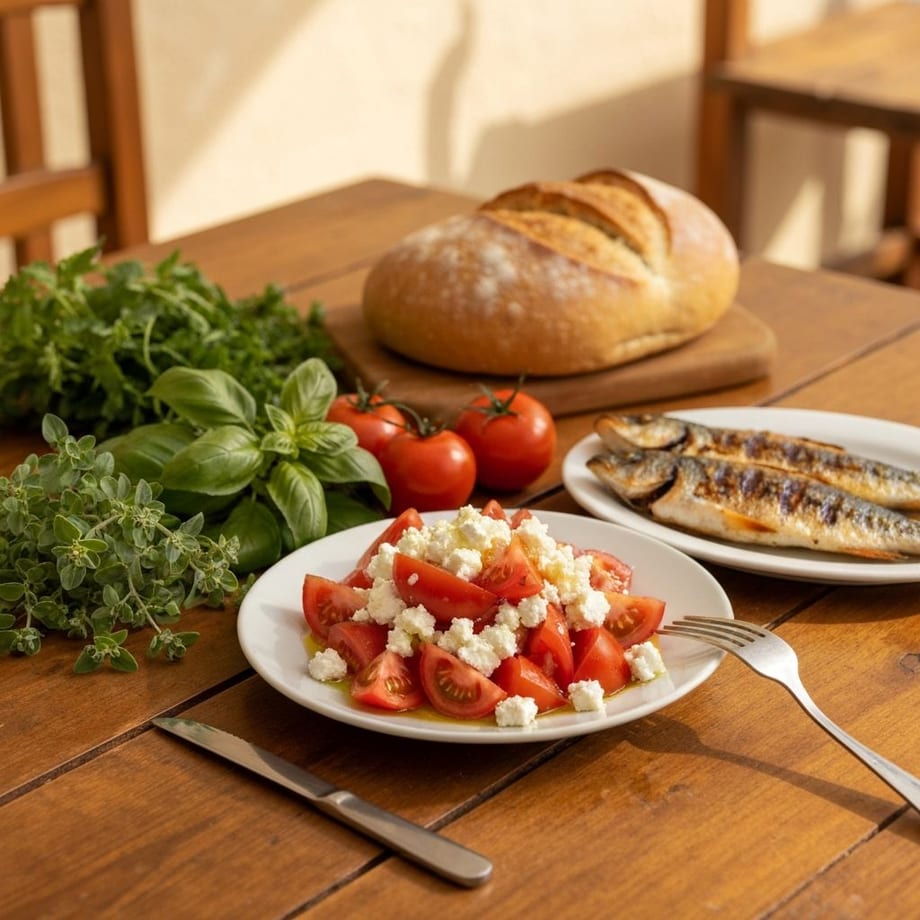
The Cretan diet is often cited as one of the healthiest in the world. But beyond the statistics, what makes Cretan food special is its connection to place. The olive oil comes from trees planted by grandparents. The cheese is made in mountain villages using methods unchanged for centuries. The wild greens are gathered from hillsides by people who know each plant by name.
This is not restaurant food dressed up for tourists. At its best, Cretan cuisine is home cooking elevated by exceptional ingredients and generations of knowledge. A simple dakos salad with good tomatoes and fresh oil can be revelatory.
Essential Cretan Dishes
Dakos
Crete's signature salad: barley rusk topped with fresh tomatoes, mizithra cheese, olive oil, and oregano. Simple, refreshing, and quintessentially Cretan.
Kalitsounia
Small pastries filled with sweet or savory cheese. The Chania version is typically sweet with honey; Lasithi makes them savory with wild greens.
Antikristo
Whole lamb cooked around a fire pit, a method from the mountain villages of Sfakia. Slow-roasted for hours until tender and smoky.
Stamnagathi
Wild chicory greens, slightly bitter, served boiled with olive oil and lemon. A staple of the Cretan diet and deeply rooted in rural tradition.
Apaki
Smoked pork loin, preserved with vinegar and spices, then smoked over sage and thyme. A traditional way of preserving meat in the mountains.
Gamopilafo
Wedding rice cooked in lamb or goat broth until creamy and rich. Traditionally served at weddings but now found in tavernas across the island.
Olive oil
Crete produces about a third of Greek olive oil and a significant share of European production. The Kolymvari PDO region in western Crete produces oil with Protected Designation of Origin status. Single-estate oils from small producers can be exceptional.
The covered markets in Heraklion and Chania sell quality local oils at reasonable prices. Look for producers who bottle their own oil — this indicates freshness and traceability.
Honey
Cretan honey — particularly thyme honey from the mountain slopes — has a distinct flavour shaped by the island's specific flora. It is sold in markets and specialist honey shops; buying directly from small producers is common.
Cheese
Graviera Kritis: A hard, slightly sweet cheese with PDO status — pressed and aged, with a complex flavour. One of the best cheeses in Greece.
Anthotyros: A fresh whey cheese, mild and slightly grainy — often served at breakfast or with honey.
Staka: A cooked butter cream — rich, distinctive, and entirely Cretan. Often served with eggs or bread at breakfast.
Raki (Tsikoudia)
The local spirit, distilled from grape marc after the wine pressing. Clear, strong (around 40% alcohol) and usually served cold. It is commonly offered free at the end of a meal — a gesture of hospitality rather than upselling. Do not confuse it with ouzo (which is flavoured with anise) — raki is unflavoured.
Cretan Wine
Crete has been making wine for over 4,000 years, but the modern renaissance began only in the 1990s. Today, the island produces exceptional wines from indigenous varieties you won't find anywhere else.
Vidiano is the island's white star — aromatic, full-bodied, and capable of aging. Vilana is lighter and more floral. For reds, Kotsifali is soft and fruity, while Mandilari is darker and more tannic. Liatiko produces delicate, perfumed reds, some sweet.
Wine Regions
Heraklion
The heart of Cretan winemaking. Indigenous varieties like Vidiano and Kotsifali thrive here.
Archanes
Boutique wineries in a historic village, 15 minutes from Heraklion city.
Dafnes
Known for Liatiko, a delicate red with centuries of history.
Peza
The largest wine-producing area, with cooperative and estate wineries.
Where to eat well
The best Cretan food is rarely found in the most obvious places. Harbour-front restaurants in tourist towns often serve mediocre versions of Greek classics at premium prices. The real treasures are usually a short drive away.
Look for tavernas where locals eat — places that might not have English menus, where the owner's grandmother is still cooking, where the vegetables came from the garden that morning. Ask your accommodation hosts for recommendations; they usually know the best spots.
The best rule: eat at Greek mealtimes (lunch 1–3pm, dinner 9pm onwards). Municipal markets in Heraklion (Odos 1866) and Chania are the best places to buy food products to take home — olive oil, cheese, honey, herbs, wine and raki.