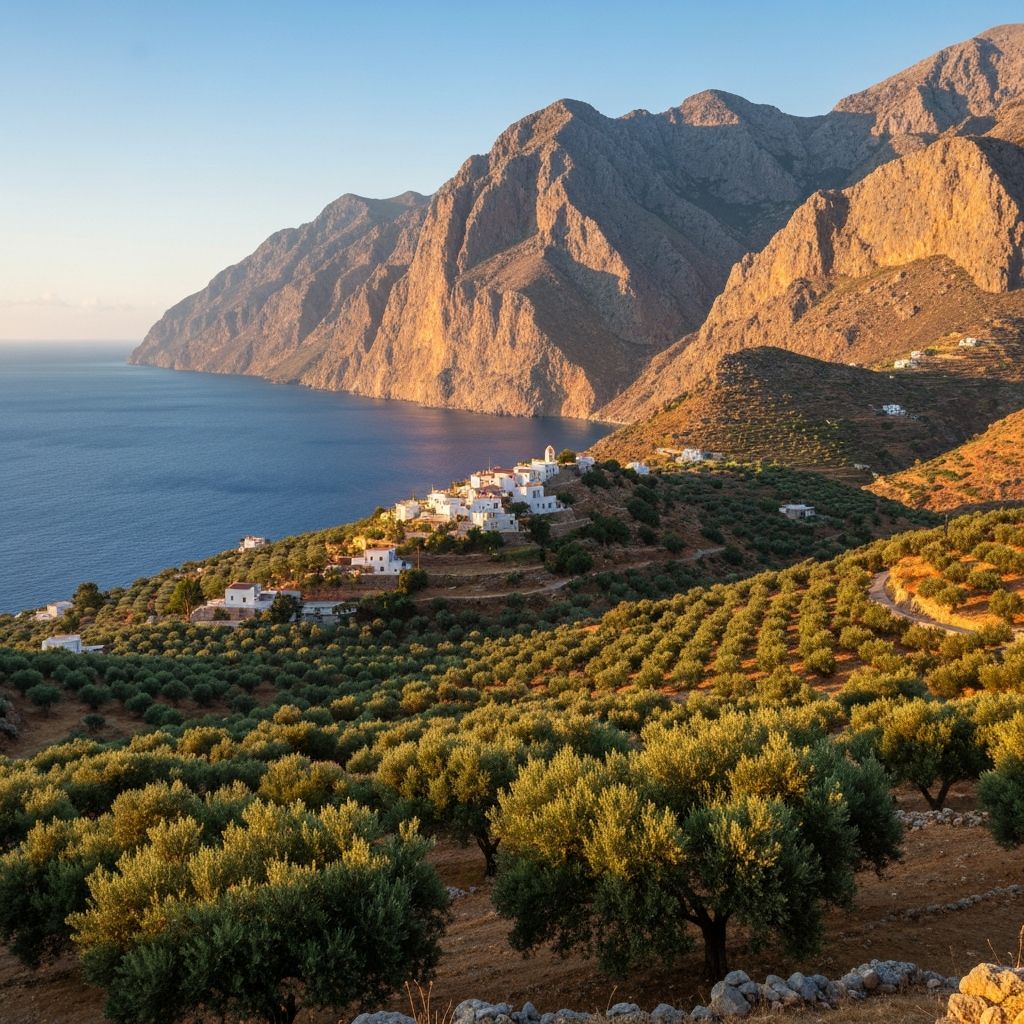
Planning Your Visit
Crete has a classic Eastern Mediterranean climate: long, dry summers and mild, wet winters. For most of the island, this means reliable sunshine from May through October, with temperatures that make beach visits comfortable from late April to early November. The mountains add a secondary climate layer — Crete is more topographically varied than it appears on a map.
The broad pattern
The year divides roughly into two seasons:
Dry season (May–October): Almost no rain. Long sunny days. Sea temperatures rise from April through August, then slowly fall. This is the tourist season, with peak crowds in July and August.
Wet season (November–April): Rain, wind, and overcast days are common, particularly December through February. Temperatures at sea level rarely drop below 10°C, but the mountains can be cold. Many hotels, restaurants, and tourist services close November–March.
Month by month
January and February
The coldest and wettest months. Heraklion averages 12–14°C. Rain is frequent but rarely prolonged. Snow is possible in the mountains. Most resorts are closed. The island is quiet — a very different experience, with local life more visible. Occasionally warm days appear, especially in the south.
March
Still cool (14–17°C), with improving weather towards the end of the month. Wildflowers begin, particularly anemones and orchids. A reasonable time for hiking before summer heat sets in. Easter preparations begin if it falls in April.
April
Increasingly pleasant — 18–22°C on average, with longer sunny periods. The landscape is green, wildflowers peak in the mountains, and almond trees are in blossom. Sea temperature is still cool for swimming (17–19°C) but the island is waking up. Easter (if it falls in April) brings significant local activity.
May
One of the best months to visit. Temperatures reach 22–26°C. The sea is warming (20–22°C). Tourist season is beginning but not yet crowded. Gorge hiking — including Samaria — is fully open and ideal before summer heat. Wildflowers are still present at altitude.
June
Reliably warm and sunny. 25–29°C. Sea temperature 23–24°C. Tourist infrastructure is fully operational. Early June is excellent — warm enough for beaches, not yet peak-season busy. By late June, numbers increase significantly.
July
Peak summer. 28–34°C average, sometimes higher inland. Sea 25–26°C. Samaria Gorge hike can be hot — start very early. Beaches are busy, particularly the well-known ones. The meltemi (northern wind) provides relief on the north coast and can make the sea rough. South coast is more sheltered and hot.
August
The hottest month and the busiest. Temperatures frequently reach 35°C inland, with occasional extremes above 40°C. The Sirocco (south wind from Africa) brings brief spells of dust and intense heat. Ferries and flights are most frequent, but accommodation prices peak. Book well in advance.
September
The summer crowd thins out after mid-August, but warmth continues. 26–30°C, sea 25–26°C. Many consider September the best month — full beach conditions with fewer tourists. The south coast remains excellent.
October
Warm enough to swim (sea 23–24°C), with air temperatures 22–26°C. Some rain begins mid-month, especially in the west. Many tourist businesses start closing after mid-October. A peaceful, atmospheric time to visit, especially for Chania’s old town and inland villages.
November
The transition month. Weather becomes variable — warm sunny days alternating with rain and wind. Sea temperature drops to 21–22°C. Most resorts are quiet or closed. The island returns to its local pace.
December
Rain and overcast days are common. Average 14–16°C. The mountains may have snow. Christmas in Cretan towns is low-key compared to northern Europe, but Heraklion and Chania have some activity.
Regional variation
Crete is 260km long and crossed by mountain ranges — the climate varies more than a single set of averages suggests:
West (Chania region): The wettest area. Chania city gets roughly 630mm of rain per year, mostly in winter. The White Mountains (Lefka Ori) can hold snow into May.
Central (Rethymno, Heraklion): Moderate. Less rain than Chania. Mount Ida (Psiloritis, 2,456m) affects local weather patterns.
East (Lasithi): Drier than the west. The Lasithi Plateau (800m elevation) is noticeably cooler than the coast.
South coast: More sheltered from the northern meltemi. Hotter in summer, more prone to dust from Africa. Towns like Matala, Agia Galini, and Ierapetra have the most sunshine hours in Crete.
What to pack
May–June and September–October: Light summer clothes, a layer for evenings (particularly in the mountains), sunscreen. A light waterproof for October.
July–August: Full summer gear. Hat and high-factor sunscreen are essential. Light trousers if visiting ancient sites (less comfortable than shorts for some surfaces).
November–April: A warm jacket, umbrella, and layers. Waterproof shoes are useful. If you plan mountain walks, treat it like European autumn/early winter conditions.
Frequently Asked Questions
What is the best month to visit Crete?
May, June, and September are generally considered the best months. The sea is warm, the weather is stable and sunny, but the peak-summer heat and crowds of July–August are absent.
Does it rain in Crete in summer?
Rarely. From June through September, rainfall is minimal — often zero for weeks at a time. Rain becomes more likely from October onwards, with the wettest months being December through February.
How hot does Crete get in August?
Inland areas regularly reach 35–38°C in August. Coastal areas are tempered by sea breezes, typically 28–32°C. The south coast can be especially hot due to the Sirocco wind from Africa.
Can you swim in Crete in October?
Yes. The sea retains summer warmth well into October, typically 23–25°C. The weather is usually still pleasant, making October an excellent, less crowded time to visit.
Does Crete get snow?
Not at sea level. The White Mountains (Lefka Ori) in Chania and Mount Ida (Psiloritis) near Rethymno receive snow from December through March, sometimes visible from the coast.
- 1. Hellenic National Meteorological Service (EMY)
Official Greek meteorological agency — historical climate data and forecasts
- 2. Climate-Data.org — Heraklion
Long-term climate averages for Heraklion and other Cretan towns